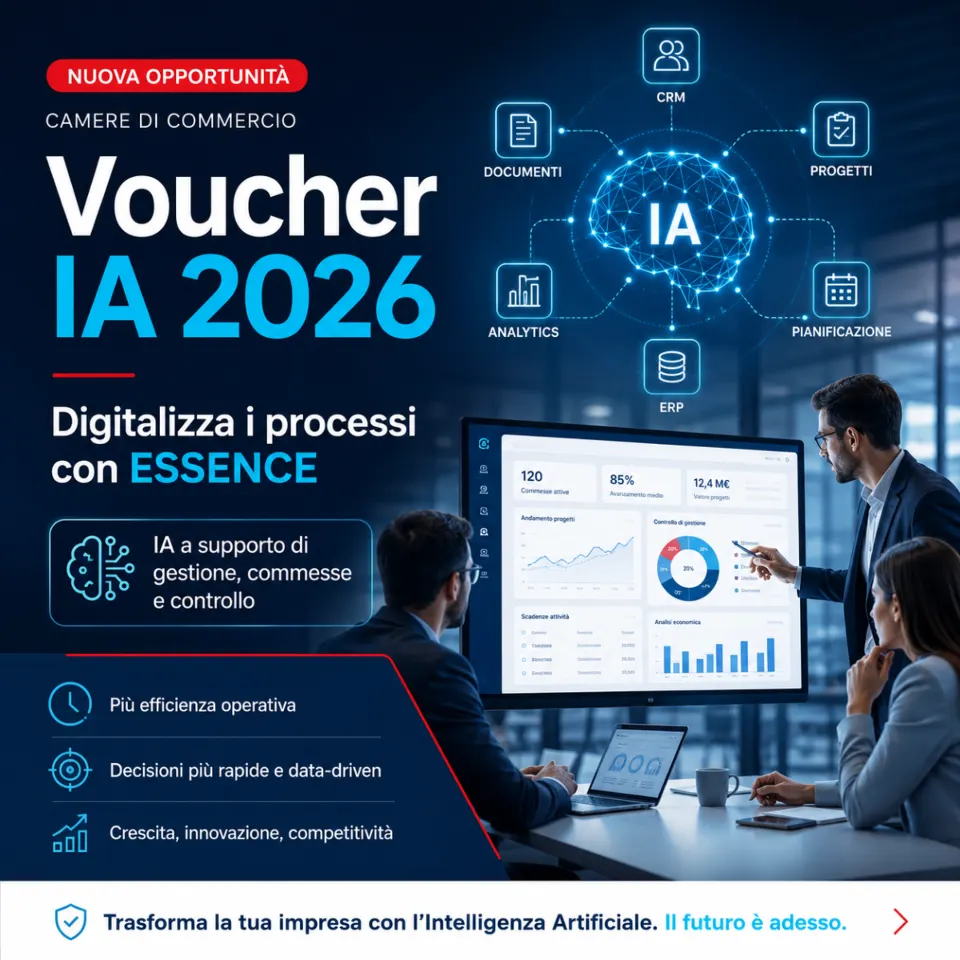
In July the new Dual Transition Voucher 2026 (Bando Voucher Doppia Transizione) gets under way, promoted by Unioncamere through the Digital Business Points (Punti Impresa Digitale) of the Italian Chambers of Commerce.
The initiative offers micro, small and medium-sized enterprises non-repayable grants for investments in digital transformation, process innovation and sustainability.
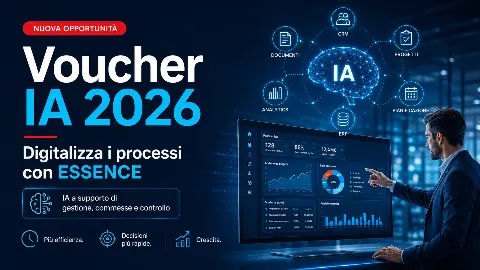
One of the main new features is the role given to Artificial Intelligence, no longer seen only as an experimental tool but as a concrete technology to be introduced into companies' organisation and day-to-day processes.
Note: pre-filling opens on 8 July
From 10:00 on 8 July 2026, companies can access InfoCamere's ReStart platform to prepare their application and upload the documentation.
The actual submission date, however, is set independently by each local Chamber of Commerce.
The call is in fact managed locally: each Chamber decides whether to take part, when to open the application window, the maximum amount that can be granted, the grant percentage and the specific eligible costs.
For this reason, before going ahead it is essential to check the call published by the Chamber of Commerce responsible for the area where the company is based.
Which investments can be funded
The national programme lists among the technologies that may be funded:
- Artificial Intelligence systems;
- ERP and CRM management software;
- cloud computing;
- cybersecurity;
- Big Data and analytics tools;
- Internet of Things and sensors;
- blockchain;
- collaborative robotics;
- augmented and virtual reality;
- solutions for sustainability and ESG monitoring;
- technologies for the energy transition.
Projects may also include specialist consulting services and the staff training needed to introduce the new technologies correctly.
The actual eligibility of each cost must always be checked in the local call.
Who can apply
In general, the voucher is aimed at micro, small and medium-sized enterprises that:
- have an operating site in the area of the Chamber of Commerce they apply to;
- are active and duly registered in the Companies Register;
- are up to date with the annual Chamber of Commerce fee;
- hold a valid DURC (certificate of social security compliance);
- comply with the limits of the "de minimis" regime.
Each local call may add further requirements, exclusions or conditions.
SELFI 4.0 is a mandatory step
Before applying, the company must complete SELFI 4.0, the free Digital Business Point assessment that measures the organisation's level of digital maturity.
The assessment must be completed in the three months before the application is submitted and is a mandatory requirement of the national initiative.
To prepare the application you will generally also need:
- SPID, CNS or CIE (Italian digital identity);
- the digital signature of the legal representative;
- an active PEC (certified email) address;
- quotes and a detailed description of the project;
- the documentation required by the competent Chamber of Commerce.
A first-come, first-served call: why you need to prepare in advance
The procedure is evaluative and first-come, first-served. This means applications are normally examined in the order they are submitted, until the available funds run out.
Simply pre-filling the application from 8 July does not give priority. What counts is the date and time of the actual submission, according to the calendar set by each Chamber of Commerce.
It is therefore wise not to wait until the window opens to:
- check the requirements;
- complete SELFI 4.0;
- define the project;
- identify the technologies to introduce;
- request quotes;
- prepare all the documentation.
"Buying AI" is not enough: you need a project built on your processes
The most common mistake is to think of Artificial Intelligence as a stand-alone piece of software to buy and add to the tools already in place.
The real value comes when AI is integrated into business processes and works on organised, reliable information.
For example, it can:
- analyse data on clients, projects and activities;
- support the preparation of quotes and offers;
- identify delays, anomalies and critical situations;
- help with resource planning;
- summarise documents and communications;
- help staff find information;
- improve control over margins;
- automate administrative and repetitive tasks;
- suggest priorities and operational actions.
To achieve these results, Artificial Intelligence must be connected to the company's real data and placed inside a management system able to govern the whole process.
ESSENCE: Artificial Intelligence built into business management
ESSENCE, the ERP platform developed by ESSE I, lets you manage clients, sales opportunities, quotes, contracts, projects, jobs, field work, resources, documents, invoicing, deadlines and management control in a single environment.
Artificial Intelligence can be integrated into the various modules to give people concrete support in their daily work.
So this is not about using a chatbot that sits apart from the rest of the company, but about applying AI to the information and processes held in the management system.
Possible applications include:
- help with writing offers and quotes;
- automatic analysis of documents and requests;
- smart information search;
- support for project and job management;
- analysis of costs and margins;
- detection of anomalies;
- generation of summaries and reports;
- planning support;
- automation of repetitive tasks;
- operational suggestions based on company data.
ESSENCE is a fully configurable platform. It can be adapted to the processes already in place, integrated with existing software, or used to digitise the activities that are still handled today with Excel sheets, emails, documents and manual procedures.
ESSE I can help you define the project
ESSE I can work alongside companies on the initial analysis of their processes and on defining a technology project consistent with the goals of the call.
This work can include:
- analysis of business needs and processes;
- identifying the areas where Artificial Intelligence can be introduced;
- choosing the most suitable ESSENCE features;
- integration with the software and databases already in use;
- preparing the technical project and its quote;
- configuring and customising the platform;
- staff training;
- support during the roll-out of the solution.
The eligibility of the project and of each cost remains subject to the provisions of the call published by the competent local Chamber of Commerce.
Turning a grant into a worthwhile investment
The Dual Transition Voucher is an opportunity to reduce the cost of a technology investment, but the grant should not be the starting point.
The most important question is a different one:
which business processes can become faster, easier to control and smarter thanks to technology?
Starting from this analysis, it is possible to build a truly useful project that keeps delivering benefits after the call has closed.
Interested companies can contact ESSE I to assess how ESSENCE and Artificial Intelligence can be applied to their organisational processes.
Contact ESSE I and tell us how your company works today. We will design a solution built around your real needs.