While with ESSE I's social posts we try to keep everyone who follows us up to date on news from the ICT world, with our blog articles we try to tell our own story, to reveal what goes on "behind the scenes" of our work, and to show ourselves not only as digital professionals but also as what we are above all else: people.
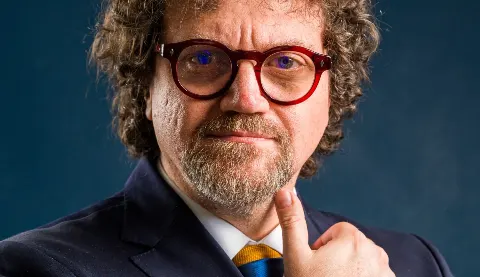
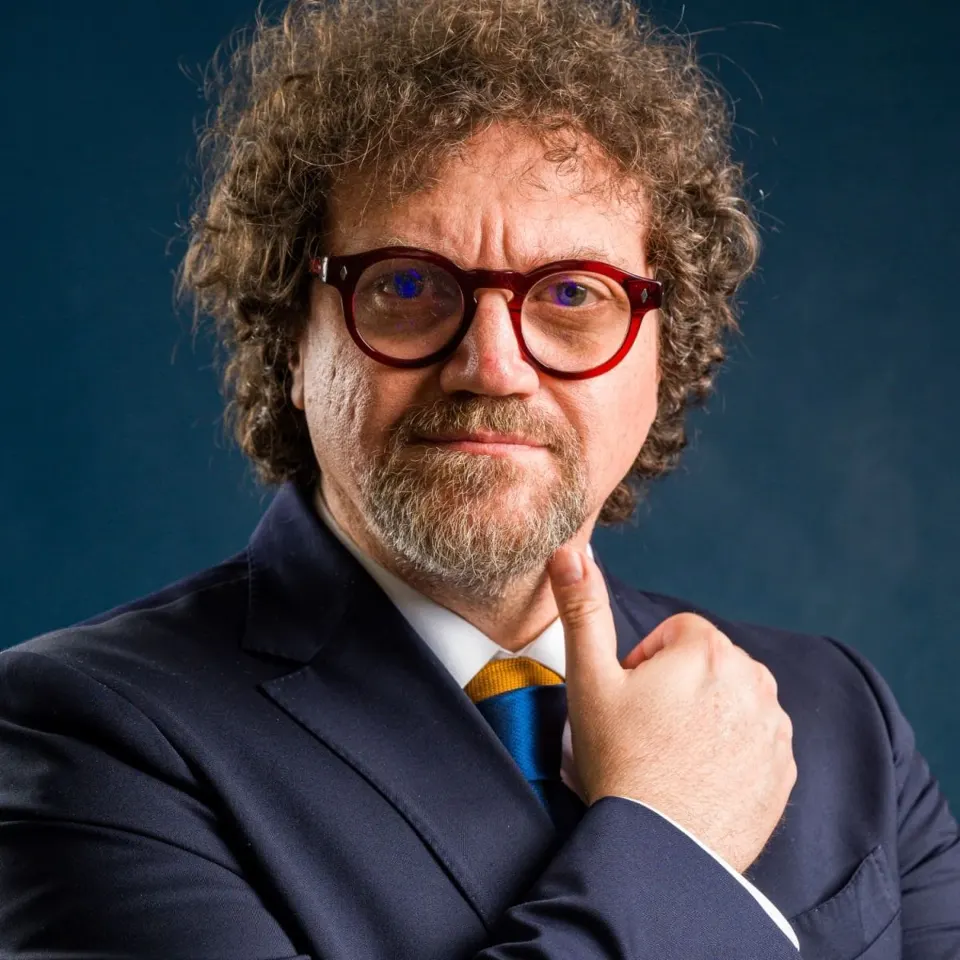
So it is no coincidence that today, after explaining in our first articles what we mean by "harmony, not just bits", we try to tell the story of ESSE I by interviewing Massimiliano Aiello, its CEO & founder, because we believe no one can tell it better than he can.
Also, and no less important, we believe our chat can help many people understand what it means to build a more than respectable career in the world of coding and how to develop it to meet the ever more demanding requirements of a now very crowded ICT market.
Enjoy the read!
Leo: Max, let's start at the beginning. How did your passion for computing and programming begin? Would you tell us about it?
Max: I've always been a pathological enthusiast, and when I find something that sparks my curiosity I throw myself into it headlong. That's how I started with computing too: one day I went to the house of a friend who was studying Turbo Pascal (the teaching language par excellence), and I was amazed at how wonderfully logical and clear the approach to solving problems seemed to me.
So, a couple of years later, I enrolled in computer engineering (it wasn't yet called that at the time). The rest is history.
L: As in, you dropped everything and enrolled in History? After that joke you'd be within your rights to fire me!
Come on, I'll be serious, because history – personal history – matters: it is from memory that the discovery of "why" is born, that conscious personal motivation that helps you understand better who you are and where you are going. And which can also be "used" in communication to relate better to others.
Looking into your past, what struck me most was discovering, during our first briefs, that you used to be a pianist. Can you tell us about your passion for music too?
M: As a child I wasn't good at socialising because I always got my approach to people wrong – something I later worked on a lot, and now it's what I do best. With music, on the other hand, I was at ease: it responded to my feelings, filling me with serenity and helping me analyse myself to understand how to improve.
I started by chance, plinking on a Farfisa keyboard that my brother, then a singer in a band, had brought home. Then a successful attempt at a private music school and, after that, middle school at the conservatoire. It was the only thing I was good at, and it kept me from failing the other subjects. I remember a teacher who, precisely because of my difficulties relating to people, kept telling me every day: "You'll never amount to anything". But music stayed with me, supporting me without ever judging me, and in the end I think I've more than made up for it.
L: Yes, that must have been really demotivating to hear. But then, as we've come to understand together, there was an "invisible thread of harmony" inside you that had to follow its creative course. And it did, motivating you in a field only apparently very different but which actually has connections with music: computing.
So, what drives you every day in your work as CEO of ESSE I, coordinating your team? What motivates you?
M: I love what I do, but only recently have I understood that the deep reason is "creating harmony". Apart from that, I have to say I've always been very driven by knowledge too.
As a pragmatic and curious person I asked myself: what other job could give me the chance to understand so many things in so many different fields, if not programming?
Indeed, with platforms for telemedicine, online medical records, tour operators, telcos, INPS (Italy's social security institute), training, retail, food, textiles, automation, traceability, construction and much more, I've had to – and still have to – deal every day with all kinds of professionals, getting inside company and supply-chain processes and absorbing every possible kind of knowledge.
All this also feeds my enthusiasm. And it seems I'm good at what I do.
L: But let's turn to ESSE I: how did the idea of starting your own company come about? Where does its name come from?
M: I devoted the first phase of my working life to learning a lot. Then coming up with ideas and creating became a necessity, like the desire to keep doing new things.
So in 2007 I founded ESSE I, when I was no longer happy at my previous company. Only later did I understand that my unease came from the fact that I was expected to deal only with short-term profit, with no chance to put forward my own vision. With ESSE I I finally found what I was looking for: the freedom to create. In fact, I managed to patent several solutions and we became an Innovative SME.
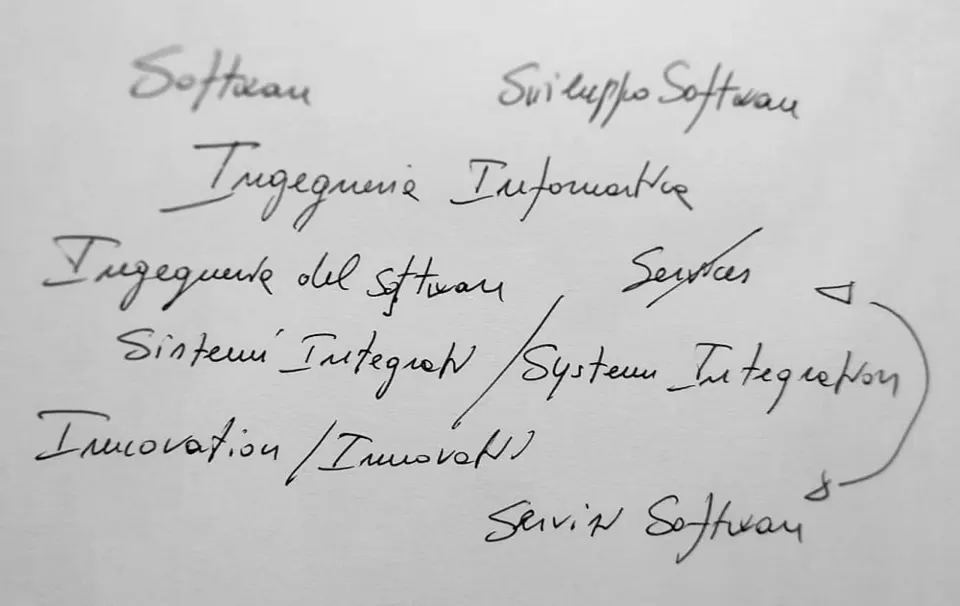
The name was chosen, as usual, thanks to my tendency to play with words. I was so undecided about the name that I wrote down on a sheet of paper the words that came to mind about what I could initially offer, and I noticed they all began with S or I. It came naturally to sum it all up simply as "ESSE I" (how the letters S and I are pronounced in Italian).
L: You know I'm not a big fan of acronyms because I find them cold. In your case, though, I saw a nice logic in it. Among other things, "SI" sounds very much like "sì", Italian for "yes", a word that evokes positivity and enthusiasm. Values which, together with harmony, inspire both the team members and the stakeholders.
The team is an important point I'd like to explore by asking you to tell us about it, but we'll devote a future article to your team.
Right now, though, I want to know what "generating value" with software and IT means to you. Because you know very well how important it is for a company to give a concrete answer to clients' needs.
M: The way I see it, anything that can benefit someone is value, from economic to organisational and emotional value. If optimising business processes, a platform for controlling every processing stage, managing a sales network or a sales platform leading to e-commerce improves a company's quality, then that is value.
L: And what about the advantages and disadvantages of working in this sector? What's your experience at ESSE I?
M: It depends on what you mean by advantages and disadvantages. Economically, in this sector, if you have the skills behind you there shouldn't be any disadvantages. Of course, there is a lot of confusion in the market for IT solutions, so much so that clients sometimes struggle to recognise or choose quality.
And in fact, in my view, it's no coincidence that most of our clients came to us after being disappointed by their previous suppliers.
My company's biggest difficulty?
We have a very skilled team but, having focused on quality, we haven't grown much in headcount over the years: new graduates prefer to go to large companies because they feel safer there. That's also why, as you know, Leo, I decided with your help to put more emphasis on company communication: not only to communicate better with our clients, but also to show candidates that, although we're not a multinational, ours is a "harmonious" environment with high-level skills, where it's worth working from every point of view, both financial and social.
L: Before I let you go, one last question which is perhaps linked to your answer.
In your experience, for you and your team, is working in southern Italy more of an advantage or a disadvantage?
M: Thanks to remote working we can work anywhere. It doesn't matter whether you're in Milan, Reggio Calabria, Turin, Marsala or even on the other side of the world. We work by tasks and never with the anxiety of clocking in. There are no fixed hours, only goals. In fact, when lockdown came, ESSE I didn't change the way it operated at all: we carried on as if nothing had happened, because for us it was normal. Actually, someone even went to work from their holiday home by the sea, to our great envy when they showed us the white beach behind them.
So no, working in the South isn't a disadvantage, at least not for us. Coding at ESSE I, for those who have the skills our open positions call for, is well paid and, above all, enjoyable, given the positive environment we've managed to create and, we hope, are also communicating to the outside world.
L: Thank you, Max. For the interview and also for your trust. Until next time.
PS: would you like to join ESSE I's development team? Take a look at our open positions. We look forward to welcoming you on board!