CMSs (content management systems), CRMs (customer relationship management) and packaged and SaaS software solutions (software as a service) have been hugely successful because they have greatly reduced the business costs of creating and maintaining online content, managing contacts and running the logistics and production activities of many product categories.
But it hasn't always been this way: at the end of the last century, before they became widespread, managing the customer and supplier records of – say – a printing company with software, and perhaps also its orders and invoices, often meant having a programmer or a software house build it. Only in the last two decades have companies begun to find solutions (cloud ones included) that could meet these needs at moderate cost.
However, when these needs become more specific, as with the "e-commerce phenomenon" that has revolutionised many existing business models – printing companies' included – it is still difficult, if not impossible, for low-cost or even free solutions to be an adequate answer.
We are generally talking about "young and dynamic companies" (which shouldn't write it on their website as a slogan, but prove it through their actions), whose production or logistics process, or business model, has evolved substantially over the years and has now become a process unique of its kind. Or an original business model.
Companies where innovation reigns
This transformation, social as well as economic, is generally the most important reason why extreme software customisation is now fundamental to business success. A concept that we believe is even truer when you consider how hard modern companies try to stand out from the competition, meet their customers' specific needs and improve operational efficiency.
In this article we will try to explore this reason in depth; or rather, to be precise, we will break it down into no fewer than six.
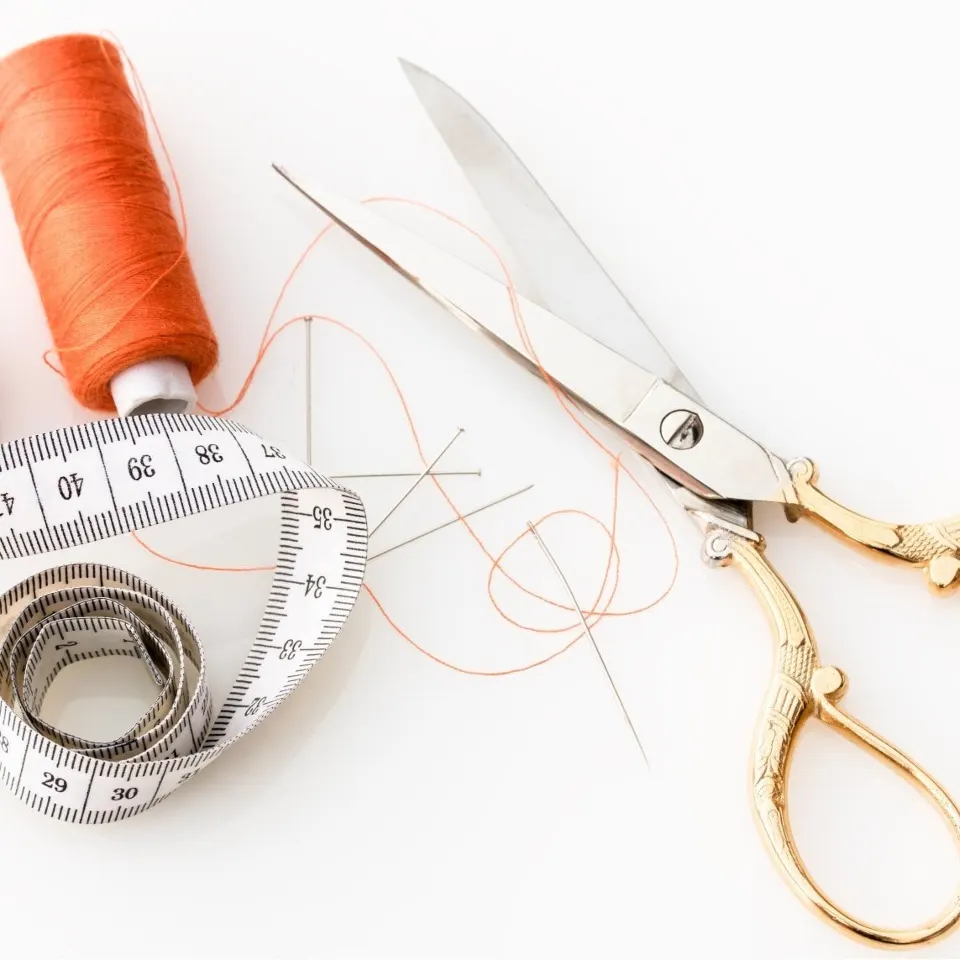
These are our six most important reasons why, if you run a company – all the more so a technology company with a high degree of innovation – you would do better to rule out from the start the convenient, cheap option of buying and using a basic application with standard features (for example a CMS such as WordPress enriched with a few plugins "configured as best one can"), and instead opt for a more complex application (perhaps a website too) that is fully customised and made like a tailored suit. An application which, in return for an investment that is certainly not cheap (but which you can get funded – there is no shortage of grants), can enhance your production or logistics cycle and, as a result, generate value for your company.
Value that can be "spent" in an increasingly competitive market, where aspects such as quality, originality, efficiency and, indeed, customisation are of crucial importance.
Reason 1: it meets the company's unique needs
Every business is unique, with specific processes, goals and workflows. What works for one company may not suit another.
Customisation lets you adapt an application to your unique needs: you can build it to align with your existing processes instead of having to adapt your business processes to a standard application.
Software that meets the company's specific needs leads to greater peace of mind, higher effectiveness and increased productivity.
Reason 2: it improves the user experience
A highly customised business application, as is often the case, gives stakeholders access to a back office where they can manage their own records, order products or services, check order status or, in general, take part in updating and managing data, offering a better user experience.
In this way, internal and external users will feel more at ease using an application designed with their specific needs in mind. Adopting a dedicated "UXO strategy" (user experience optimisation) at the design stage translates into greater use of the application and increased user satisfaction.
What's more, a positive user experience can benefit SEO rankings (just think of an e-commerce site that is pleasant to browse, which lengthens customers' visits and sends a "positive flag" to Google, which will take it into account in its SERPs). It can also improve the company's reputation and customer loyalty.
Reason 3: it adapts to rapid change
The business world is constantly evolving and companies, rather like in Darwin's theory of evolution, must be able to adapt quickly to change in order to survive (and perhaps thrive). Highly customisable business applications must be built with greater care and require more time and work during development, but on the other hand they offer the great advantage that they can be modified and adapted to respond fully to new needs and emerging challenges.
This allows companies to stay competitive and agile in a rapidly changing environment.
Reason 4: it strengthens competitive advantage
You may never have thought about it, but customisation can also be an asset and a competitive advantage, for at least a couple of reasons.
First, companies able to offer highly customised solutions to their customers can attract new business and investors and retain existing customers.
Second, and by no means less important, customisation can help you stand out from the competition and become a preferred partner for customers.
The importance of standing out from competitors is still often overlooked, yet it is among the most decisive factors in whether or not you are chosen at the point of purchase! According to the laws of brand positioning, companies that customers perceive as too similar or identical to one another tend to be less desirable, except on price (remember the infamous "price war"?).
Differentiating yourself with a unique brand associated with unique online software is one of the most important keys to a company's success.
Reason 5: it improves operational efficiency
Optimising business processes is fundamental to a company's success.
Highly customised applications, in which every single step of the production chain, customer service and logistics is "synchronised by code", can automate processes, eliminate inefficiencies and greatly simplify operations.
This translates into better performance, lower costs, time savings (and therefore fewer working hours, and therefore lower staff costs) and higher profits.
Reason 6: it improves data management
Last but not least, customising a business application makes it possible to collect and analyse the data relevant to the company's specific needs, something standard software often can only do partially.
This "business intelligence" activity can lead to a better understanding of company data and more informed decision-making. The ability to customise reports and data analysis can have a significant impact on business strategy. And on sales.
In conclusion:
At ESSE I we can also offer basic software to clients with smaller budgets and, hopefully, suitable needs.
However, we are convinced that customisation – building something "made to measure", like a piece of craftsmanship – is truly fundamental to the success of a business application, because we believe that companies should invest their money to make a difference, not merely to imitate other products or services.
Companies should invest to create new ones – we are clearly talking about "new digital products" – that can solve new problems and meet new needs.
Going back to the printing example, for the company Ti Stampo (Creative Digital Printers) we built something along these lines: a custom platform for ordering book printing online, able to automatically calculate the price based on a huge number of variables such as paper type, size, number of copies, discounts and customer-specific price lists. None of this can be achieved with standard solutions.
Businesses like Ti Stampo, which recognise the importance of custom software, certainly take on greater business risk, but in the long run they tend to see their chances of thriving increase considerably in an increasingly competitive and fast-changing market.
After all, we believe the old saying applies here too: "buy cheap, buy twice".
And we don't say this because we'd like your request for a quote (which you can ask us for here, with no obligation) to be high-budget for the sake of our bank balance, but because we know that opting for a cheap, standard solution – unless you are content to "survive" for a while before closing down – is almost never a good business decision.